Clearing Hazardous Growth From Business Properties
Commercial Tree Removal in Tampa for properties with damaged trees threatening operations or structures
Large-scale tree removal on commercial sites requires coordination with active business operations, protection of adjacent structures, and compliance with site-specific safety protocols. 81Tree services handles tree removal for property managers, homeowners associations, and commercial property owners throughout Tampa facing hazardous or unwanted trees that compromise safety or planned development. This work involves rigging systems, sectional dismantling when space is limited, and scheduled access that avoids disrupting tenant activity or customer traffic.
The process begins with site assessment to identify tree condition, proximity to buildings or utilities, access routes for equipment, and any underground infrastructure that affects removal strategy. Trees near parking structures, building facades, or electrical service require controlled dismantling rather than directional felling, with each section lowered by rope to prevent ground impact damage. Stump grinding and site restoration follow removal to prepare the area for landscaping or construction.
Schedule an on-site assessment to evaluate tree hazards and receive a detailed removal plan for your commercial property.
What Proper Commercial Removal Requires
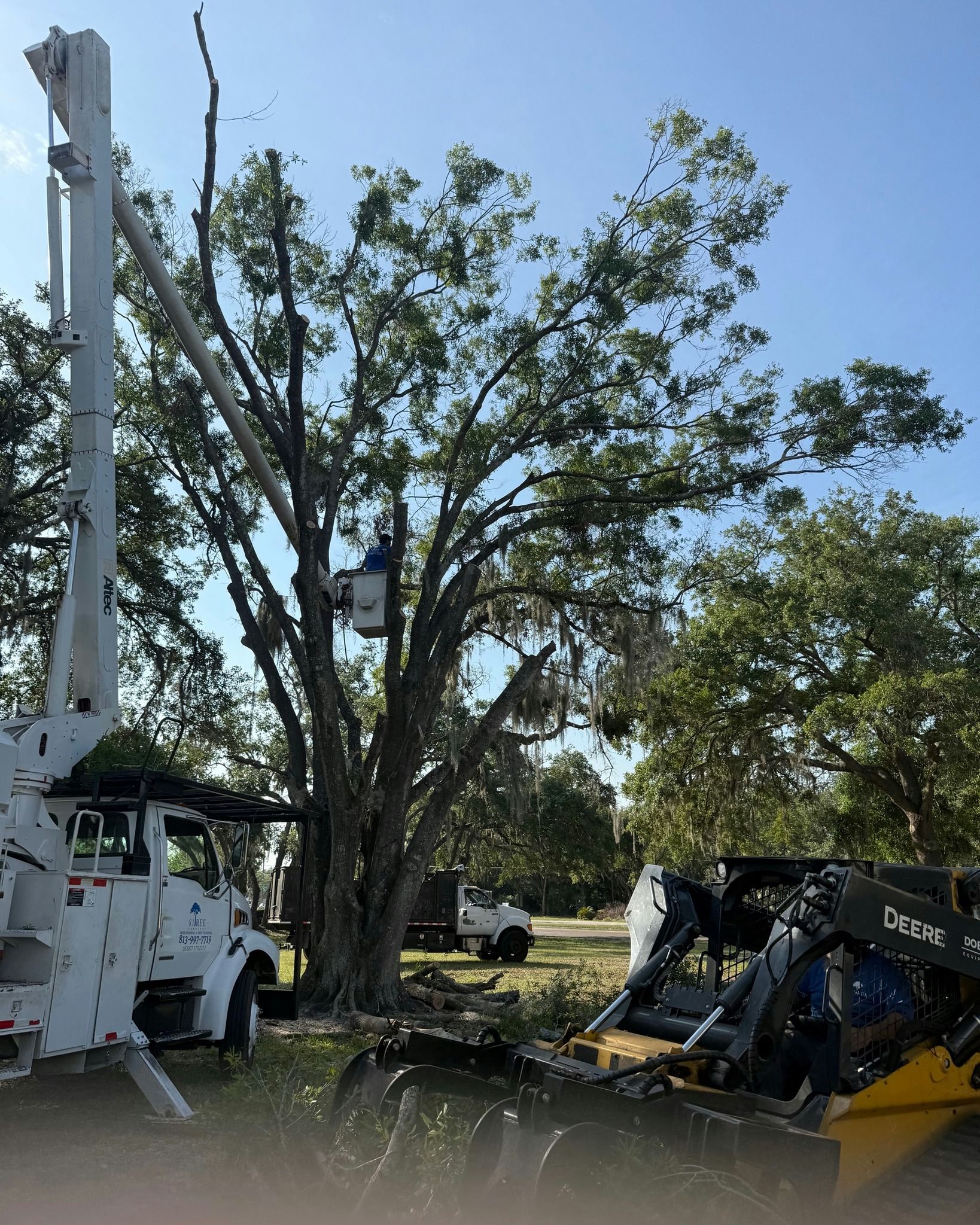
Commercial tree removal involves load calculations for crane work or rigging systems when trees overhang roofs, parking areas, or adjacent tenant spaces. Work crews section the tree from top down, controlling each cut to prevent lateral movement that could strike windows, HVAC units, or parked vehicles. Ground crews manage debris removal continuously to keep fire lanes and pedestrian paths clear throughout the job.
After removal, you'll notice the immediate elimination of hazards like widow-makers in the canopy, root systems that were lifting pavement, or trees leaning toward high-traffic areas. The site is cleared of all wood debris, and stumps are ground below grade so the area can be sodded, paved, or planted without surface obstacles. Properties with multiple removals regain usable space for tenant amenities, stormwater management features, or expanded parking zones.
The scope of commercial jobs often includes coordination with utility companies for temporary line clearance, permits for work in public rights-of-way, and scheduling around peak business hours to minimize visibility of heavy equipment. Removal plans account for whether the property requires complete stump extraction for construction grading or standard grinding sufficient for landscape restoration.
What Commercial Property Managers Ask Before Removal
Tree removal on active commercial sites raises specific questions about timing, safety measures, and site restoration. These answers address the most common concerns for Tampa-area property managers coordinating large-scale removals.
How is access managed on properties with limited equipment entry points?
Crews evaluate gate widths, weight limits on paved areas, and underground utility locations before mobilizing equipment, often using compact machinery or rigging systems when crane access is restricted by building layout or parking configuration.
What happens to trees located near building foundations or underground utilities?
Removal near structures involves sectional dismantling with rigging to control each piece, while trees above water or gas lines require hand-cutting in the root zone to avoid excavation damage that could compromise service infrastructure.
When should removal be scheduled to avoid disrupting business operations?
Most commercial removals in Tampa are scheduled during early morning hours before tenant arrival or on weekends when parking demand is lower, with multi-day projects segmented to keep access routes open during peak business periods.
What site restoration is included after tree removal?
Standard removal includes stump grinding to six inches below grade, debris hauling, and rough grading of the work area, with topsoil placement and sod installation available as additional services depending on the property's landscaping plan.
How are hazardous trees identified before they cause property damage?
Assessment looks for visible decay in the trunk, root plate movement indicating instability, dead canopy sections exceeding thirty percent of the crown, and lean angles that place the tree's center of gravity over structures or walkways.
81Tree services coordinates removal projects with the operational needs of office parks, retail centers, and multi-unit residential properties throughout Tampa. Request a site evaluation to develop a removal timeline and access plan tailored to your property's layout and tenant activity.