Immediate Response When Trees Threaten Safety
Emergency Tree Services in Tampa for properties with fallen or hazardous trees after storms or sudden failure
Trees topple onto roofs, block driveways, or hang precariously over structures when hurricane-force winds, lightning strikes, or root failure compromise their stability. These situations demand immediate attention to prevent further property damage, restore access, and eliminate risks to people and utilities. 81Tree services responds to emergency calls across Tampa, assessing the hazard, stabilizing or removing the tree, and clearing debris so homeowners and businesses can begin recovery without waiting days for scheduled service.
Emergency tree work involves cutting and rigging fallen trunks off structures, removing split or hanging limbs before they drop, and clearing roadways or driveways blocked by storm debris. In Tampa, summer thunderstorms and tropical systems create sudden surges in emergency calls, with saturated soil causing shallow-rooted trees to uproot and high winds snapping weakened trunks. Quick removal reduces secondary damage from rain entering compromised roofs, prevents limbs from crashing through windows or vehicles, and allows insurance adjusters to inspect the scene without active hazards overhead.
Call immediately if a tree has fallen on your property or is leaning against a structure with visible cracking or instability.
What Emergency Tree Removal Involves
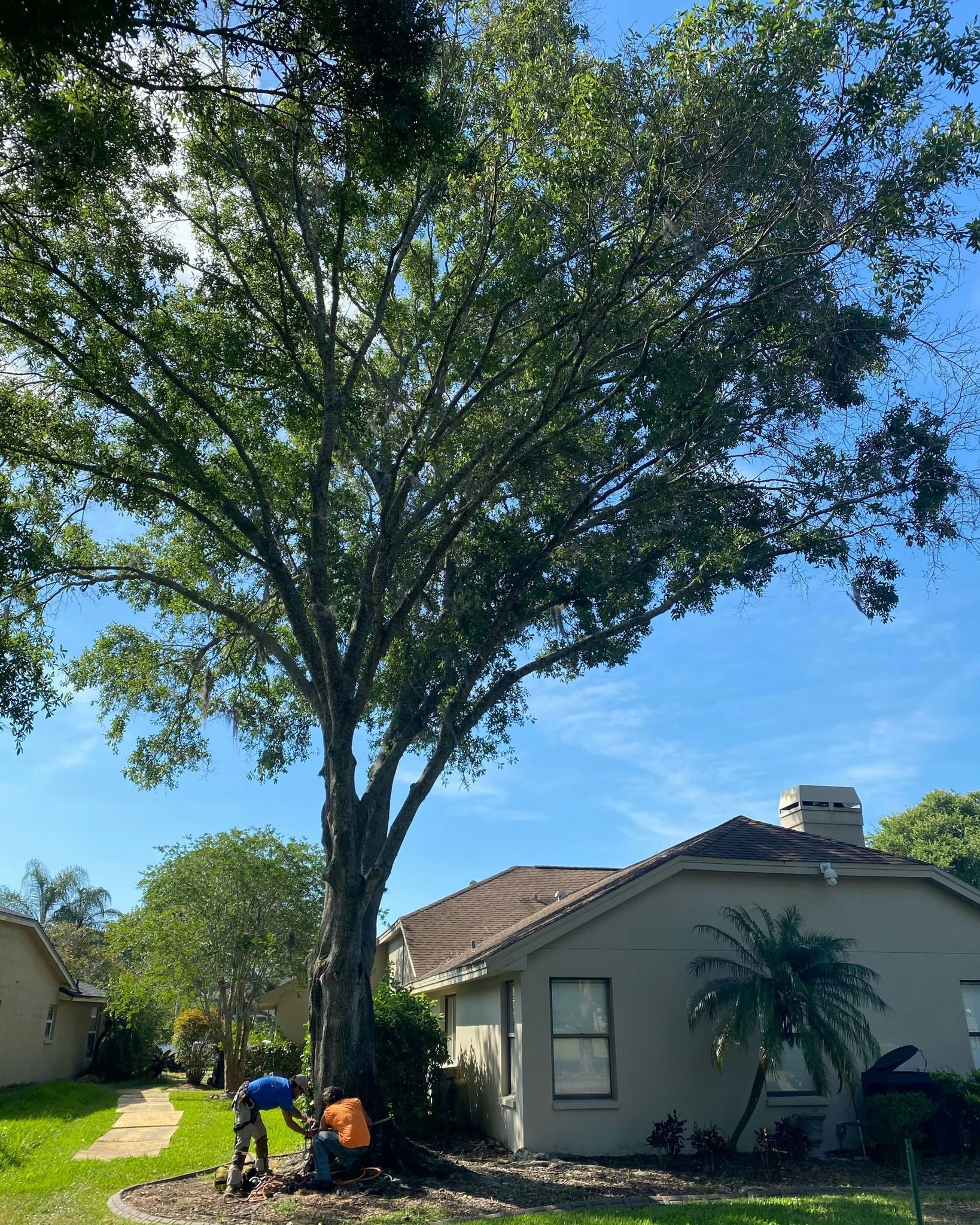
Emergency response begins with assessing whether the tree is touching power lines, resting on a gas meter, or actively threatening the structural integrity of a building. If utilities are involved, the power company must clear lines before tree work proceeds. Once the scene is safe, crews use chainsaws, rigging ropes, and sometimes cranes to section the tree into manageable pieces, working from the top down to avoid shifting weight onto already-damaged structures.
After the tree is removed, the immediate threat disappears—roofs are no longer under compression, driveways open for vehicle access, and hanging limbs stop swaying overhead with every gust of wind. Property owners can tarp damaged roofs, document losses for insurance claims, and move forward with repairs without worrying about additional tree material collapsing onto the site. Stumps and root balls are often left temporarily during emergencies and addressed later as part of a cleanup or restoration contract.
Emergency services prioritize safety and access over cosmetic cleanup, so debris piles, wood chips, and stump removal typically follow as a second phase once the crisis stabilizes and normal scheduling resumes.
Answers to Frequent Emergency Service Questions
When storms hit Tampa or trees fail unexpectedly, property owners need clarity on response times, safety protocols, and what happens next.
How quickly can you respond to an emergency?
Response time depends on call volume and crew availability, but emergency situations involving structural threats or blocked access receive priority over scheduled maintenance work, often with same-day or next-day service during active storm events.
What if the tree is touching power lines?
Do not approach trees in contact with electrical lines—contact your utility provider first to de-energize the lines, then tree crews can safely remove the material without risk of electrocution.
Will insurance cover emergency tree removal?
Most homeowner policies cover tree removal when the tree damages a structure or blocks necessary access, though coverage limits and deductibles vary, so reviewing your policy and documenting the damage with photos helps during the claims process.
What gets removed during an emergency call?
Crews focus on cutting away the portion of the tree causing immediate danger or blocking access, leaving stump grinding, debris hauling, and cosmetic cleanup for follow-up visits unless you arrange comprehensive service on-site.
Can you work at night or during bad weather in Tampa?
Crews work in rain and limited light when conditions allow safe rigging and cutting, but active lightning, high winds, or zero visibility may delay work until weather improves enough to operate equipment without added risk.
81Tree services maintains equipment and trained crews ready to handle Tampa's unpredictable storm season and sudden tree failures year-round. Save the number and reach out the moment a tree emergency develops so response can begin without unnecessary delays.